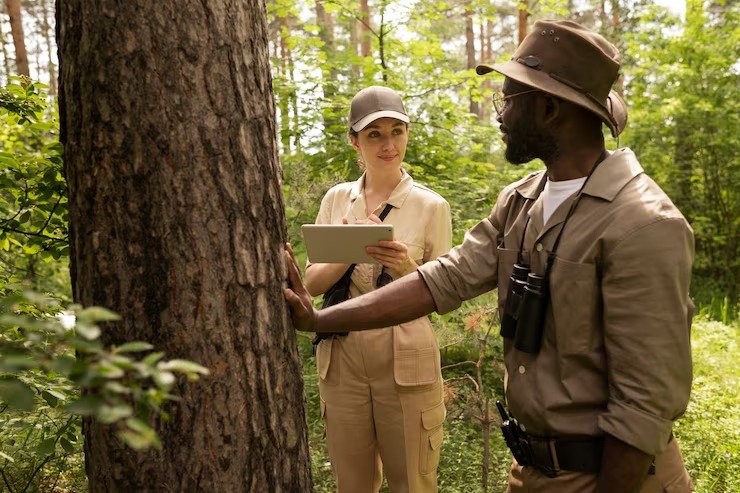
Viltnemnda is a name commonly associated with local wildlife management in Norway. It may refer to a municipal wildlife committee, a designated wildlife authority, or the personnel responsible for responding to incidents involving injured, sick, or dead wild animals. The exact structure and name vary between municipalities because local authorities organize these responsibilities differently.
Some municipalities retain a formal committee known as viltnemnda, while others assign the same practical duties to a wildlife unit, environmental department, fallviltgruppe, viltpatrulje, or ettersøkskorps. Consequently, residents should not assume that every Norwegian municipality has an identically organized body carrying this title.
Regardless of the administrative name, the underlying responsibilities form an important connection between wildlife welfare, public safety, hunting administration, traffic management, and sustainable use of local wildlife populations.
The Meaning of Viltnemnda
The Norwegian words vilt and nemnd broadly correspond to “wildlife” and “committee.” In its traditional sense, viltnemnda describes a local committee dealing with wildlife matters for which the municipality is responsible.
The historical organization of wildlife administration has changed over time. Responsibilities previously connected to a standardized wildlife board were transferred to municipalities, allowing each municipality to determine how the work should be organized. This explains why viltnemnda remains widely understood even where the official department or response team now uses another name.
Today, the practical meaning depends on local arrangements. It can describe:
- A politically appointed municipal wildlife committee
- Municipal employees responsible for wildlife administration
- A contracted team handling injured or traffic-struck animals
- An authorized search and dispatch unit
- A broader network involving the municipality, police, landowners, hunters, veterinarians, and road authorities
This distinction matters because policy decisions and emergency field operations are not always handled by the same people.
The Municipality’s Role in Wildlife Management
Norwegian municipalities perform several duties connected with wildlife and hunting. These responsibilities must be exercised within national legislation and regulations, including the Viltressursloven, which entered into force on 1 July 2026, the Nature Diversity Act, animal-welfare requirements, and regulations covering hunting and cervid management.
Municipal wildlife administration can include long-term planning, formal decisions, data registration, public guidance, and coordination of field responses. Its work is therefore broader than collecting injured animals or responding to road accidents.
Local responsibilities may include:
- Establishing objectives for cervid population development
- Processing applications concerning hunting areas
- Approving eligible hunting units and management areas
- Evaluating management plans for moose and red deer
- Allocating harvesting permits where municipal authority applies
- Registering hunting and fallen-wildlife information
- Organizing responses to injured or sick wildlife
- Coordinating searches after wildlife collisions
- Managing funds designated for eligible wildlife measures
- Providing information to landowners, hunters, and residents
The division of duties can differ according to species, location, and legal authority. Wild reindeer, large carnivores, protected species, and ordinary municipal cervid populations are not necessarily managed through the same administrative process.
Injured, Sick, and Distressed Wildlife
One of the most visible functions associated with viltnemnda is the handling of injured or sick wildlife. An animal may require attention because it has been struck by a vehicle, wounded during hunting, trapped in infrastructure, or affected by disease or another serious condition.
The first objective is to prevent unnecessary suffering without creating additional danger. Wildlife can react unpredictably when frightened, injured, or surrounded by people. Even an animal that appears unable to move may suddenly attempt to escape or defend itself.
Members of the public should normally:
- Keep a safe distance from the animal.
- Prevent children and dogs from approaching it.
- Avoid chasing, restraining, feeding, or transporting it.
- Record the location as accurately as possible.
- Note the species, direction of travel, and visible injuries.
- Contact the police or the locally designated wildlife service.
A private person should not attempt to capture or kill an animal unless the circumstances and applicable law clearly permit that action. Contacting the responsible authority allows trained personnel to assess animal welfare, public safety, species identification, and the most appropriate response.
Wildlife-Vehicle Collisions
Traffic collisions involving moose, red deer, roe deer, reindeer, or other wild animals require immediate reporting. A driver must not leave simply because the animal disappears from the road or appears capable of running away. Serious injuries may not be externally visible, and the animal may travel a considerable distance before stopping.
The driver should secure the scene without placing anyone in danger, activate hazard lights, and contact the police. Norway’s non-emergency police number is 02800, while 112 is reserved for emergencies involving immediate danger to life or serious traffic hazards.
The collision point should be marked clearly when it is safe to do so. A precise location, road number, nearby landmark, map pin, and the animal’s direction of movement can substantially improve the subsequent search.
The police may notify the municipality’s fallvilt personnel or authorized search team. These responders often use trained dogs to follow the animal’s trail and determine whether it must be humanely dispatched. Their work also helps remove carcasses, document the event, and reduce continuing danger to road users.
Following the animal independently can contaminate the trail, disturb it from a resting position, and make an effective search more difficult. The most useful assistance is accurate reporting and preservation of the collision site.
Read Also: Boelis: Name History, Genealogical Research, and Record Verification
Search Operations and Humane Dispatch
Personnel carrying out wildlife searches need practical competence in animal behavior, tracking, firearm safety, traffic safety, and humane dispatch. They may operate near roads, homes, farms, railways, or recreational areas, often at night and in difficult weather.
A field response generally begins with an assessment of the available information. The team considers the species, reported impact, visible signs, direction of movement, terrain, nearby buildings, traffic conditions, and potential danger to the public.
Not every report results in an animal being killed. The condition of the animal and the surrounding circumstances determine the appropriate action. A healthy animal resting in a normal location should not be treated in the same manner as an animal with severe trauma. Conversely, delaying necessary action can prolong suffering and allow an injured animal to enter a more hazardous area.
Decisions must be made by people with the relevant authority and competence. Animal welfare remains central, but the safety of responders and the public must also be protected.
Viltnemnda and Hunting Administration
Viltnemnda is sometimes described as a body that simply issues hunting licences. That description is misleading. Individual hunters must satisfy national requirements, while municipalities perform defined administrative functions connected with local wildlife populations and hunting areas.
For moose, red deer, and roe deer, municipal management may involve setting population objectives, determining eligible land, approving vald, reviewing multi-year population plans, and allocating permits under the applicable cervid regulations.
A vald is an approved geographical unit used for the allocation and administration of harvesting permits. Its eligible area influences the number of animals that may be harvested. Larger cooperative management areas can support planning across several properties and wildlife ranges.
The purpose is not to maximize the number of animals killed. Sustainable management requires consideration of:
- Population size and development
- Age and sex composition
- Reproduction and recruitment
- Habitat capacity and condition
- Forest and agricultural damage
- Animal health
- Traffic collisions
- Migration across property and municipal boundaries
- Reliable hunting observations and harvest records
The municipality must work within national law and cannot create unrestricted hunting rights. Hunting also depends on landowner rights, open seasons, species-specific rules, reporting duties, and the hunter’s legal qualifications.
Data-Based Wildlife Decisions
Sound wildlife management depends on evidence collected across several years. A single season can be affected by weather, hunting pressure, observation conditions, migration, or unusual mortality. Long-term records provide a stronger basis for evaluating whether a population is growing, declining, or changing in composition.
Norway’s Hjorteviltregisteret supports this work by storing information concerning moose, red deer, roe deer, wild reindeer, hunting outcomes, observations, population indicators, and selected fallen wildlife. Municipalities, hunters, management-area representatives, and other authorized participants contribute data according to their roles.
Useful indicators may include:
- Numbers of animals observed during hunting
- Harvest totals by species, age, and sex
- Calf recruitment
- Carcass weights
- Traffic-related mortality
- Other recorded deaths
- Population estimates
- Changes in habitat use
These records do not eliminate professional judgment. They make decisions more transparent and allow population objectives to be compared with measurable results.
Fallen Wildlife and Carcass Management
The Norwegian concept fallvilt generally covers wildlife found dead or killed for reasons other than ordinary hunting. It can include traffic-struck animals, animals that die from disease or injury, and animals dispatched by authorized personnel.
Handling depends on the species, location, cause of death, public-health considerations, and local procedures. A carcass beside a busy road presents a different situation from remains found deep in private woodland. Large carnivores, protected species, or animals suspected of carrying disease may require notification of additional authorities.
Members of the public should avoid moving, cutting, or claiming a carcass without clarification from the responsible authority. Ownership, examination, sampling, disposal, and registration can be governed by specific rules. Prompt reporting is particularly important when several animals are found dead, the cause appears unusual, or signs of disease are present.
Wildlife Near Homes and Public Areas
The presence of a wild animal near buildings does not automatically justify an emergency response. Deer, foxes, birds, and other species frequently use urban and semi-urban environments without posing an immediate threat.
Intervention becomes more relevant when an animal is:
- Clearly injured or seriously ill
- Trapped in fencing, netting, or infrastructure
- Creating an immediate traffic hazard
- Acting in a manner suggesting severe distress
- Unable to leave an enclosed area
- Presenting a direct and significant risk to people
- Suspected of having a reportable disease
Residents can reduce recurring problems by securing waste, avoiding deliberate feeding, protecting vulnerable plants, controlling dogs, and removing attractants where lawful and practical. Feeding can concentrate animals, increase disease transmission, create dependence, and draw wildlife toward roads or residential areas.
A local wildlife authority can assess whether the situation requires intervention or can be resolved by allowing the animal to leave undisturbed.
Different Authorities Have Different Responsibilities
Norwegian wildlife governance is distributed across local, regional, and national levels. The municipality is an important part of the system, but it is not responsible for every decision involving every wild species.
Depending on the matter, responsibility may involve:
- The municipality
- The police
- Miljødirektoratet
- The County Governor
- Regional carnivore management boards
- Wild reindeer boards
- The Norwegian Food Safety Authority
- Road or railway authorities
- Landowners and hunting-right holders
Viltnemnda should not be confused with a villreinnemnd, which has defined responsibilities for wild reindeer areas, or a rovviltnemnd, which operates within Norway’s regional carnivore-management system. Similar names do not mean that these bodies possess the same jurisdiction.
Contacting the Correct Local Service
Because municipalities use different organizational models, the correct contact may not be listed under the exact name viltnemnda. Municipal websites may instead use headings such as wildlife management, injured wildlife, fallen wildlife, wildlife patrol, environmental administration, or search team.
For urgent traffic incidents and injured large wildlife, contacting the police is generally the appropriate first step. The police can assess the immediate risk and activate the relevant local response arrangement. Non-urgent administrative matters—such as hunting areas, population plans, reporting, or municipal wildlife policy—should be directed to the municipality during its published service hours.
A useful report includes the exact location, time, species, number of animals, observed condition, direction of movement, and any immediate danger to traffic or people. Photographs may help when taken safely and without approaching or disturbing the animal.
Why Local Wildlife Management Matters
Viltnemnda represents the local, practical side of Norway’s wildlife governance. Its importance lies in combining ecological knowledge with public administration and field readiness. Effective local management can reduce animal suffering, improve traffic safety, produce reliable population data, and support responsible hunting decisions.
The strongest system is not defined by a particular committee name. It is defined by clear authority, trained responders, accurate reporting, lawful decisions, reliable data, and cooperation between municipalities, police, landowners, hunters, and national agencies.
For residents, the essential principle is straightforward: observe from a safe distance, report accurately, and allow the responsible authority to assess the situation. For municipalities, the continuing task is to balance viable wildlife populations, animal welfare, public safety, habitat conditions, and sustainable use through decisions that can be documented and reviewed.