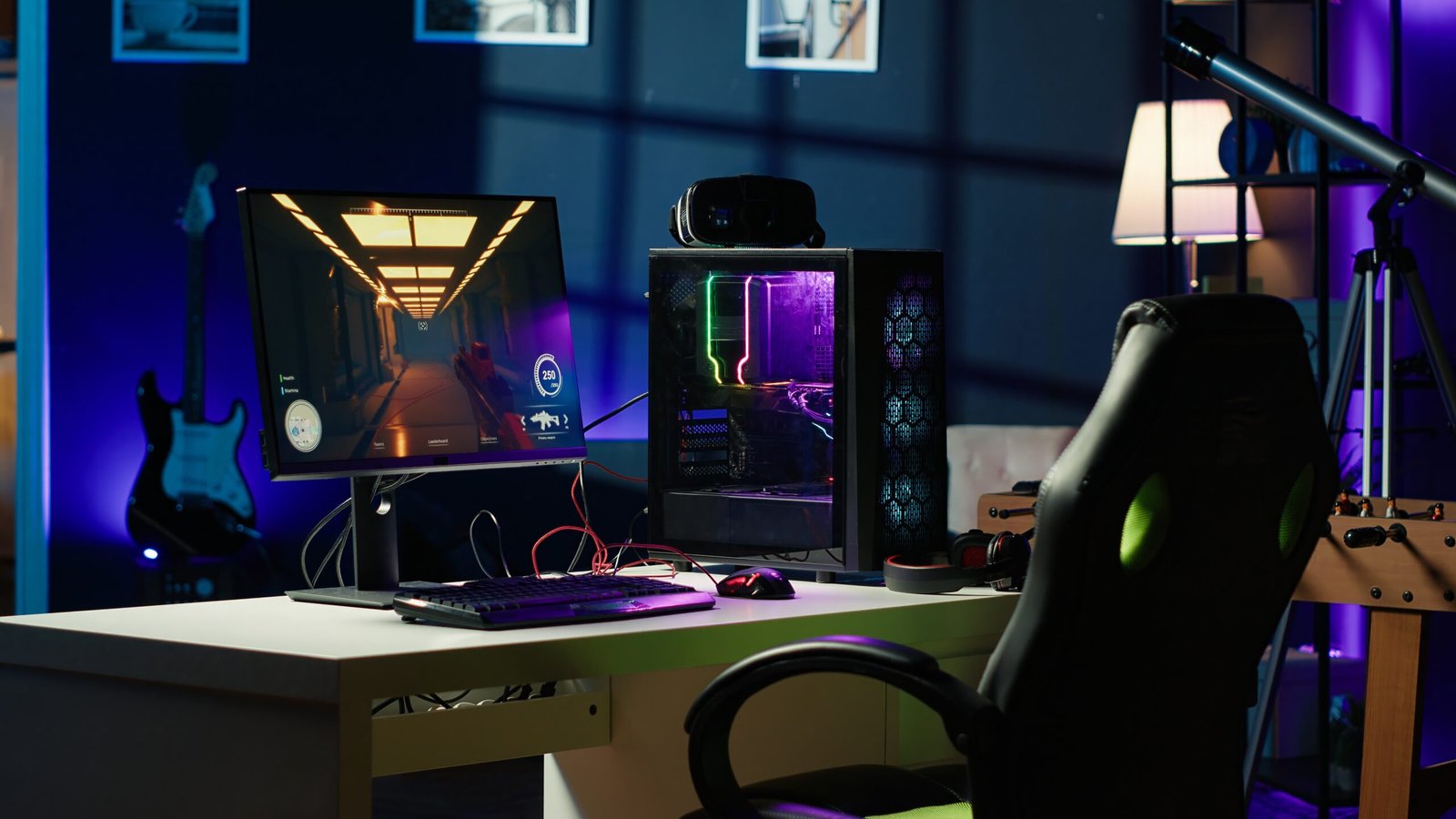
A dependable computer is not defined by the highest processor number, the most expensive graphics card, or an oversized memory specification. Its real quality appears in daily use: applications open without unnecessary delay, demanding tasks remain stable, important files stay protected, and future upgrades do not require replacing the entire system.
The Doayods PC approach brings these priorities together. It treats a computer as a connected system in which hardware, software, cooling, storage, security, and maintenance must support one another. This balanced structure is more valuable than chasing individual components that look impressive on paper but fail to deliver a consistently good experience.
The Foundation of a Well-Balanced PC
Every computer has limits. The processor can complete only a certain amount of work at once, memory has finite capacity, storage has measurable read and write speeds, and the cooling system can remove only so much heat. Problems develop when one part of the system is expected to compensate for weaknesses elsewhere.
A powerful processor paired with insufficient memory can still struggle during multitasking. A fast graphics card installed in a poorly ventilated case may reduce its speed under sustained load. Large storage capacity means little if the primary drive is slow or unreliable. Even premium hardware can feel disappointing when background software consumes resources unnecessarily.
A balanced Doayods PC should therefore be evaluated as a complete working environment. The objective is not maximum performance in every category. It is predictable performance in the tasks that matter most.
Start With the Actual Workload
Component selection becomes much easier once the computer’s primary workload is clearly defined. Office work, software development, content production, gaming, streaming, data analysis, and three-dimensional rendering place different demands on a system.
Everyday productivity depends heavily on responsiveness. A capable modern processor, adequate memory, and a fast solid-state drive usually matter more than dedicated graphics. Web browsers with many open tabs can consume significant memory, while video calls and cloud applications add continuous processor and network activity.
Creative workloads need a different balance. Video editing benefits from processor performance, graphics acceleration, sufficient memory, and fast storage for large media files. Graphic design may not require an extreme graphics card, but accurate display output and enough memory remain important. Three-dimensional rendering can depend heavily on the GPU, its video memory, or both the CPU and GPU, depending on the software.
Gaming performance is influenced by the graphics card, processor, memory configuration, display resolution, and target frame rate. A system intended for 1080p gaming does not need the same hardware as one built for high-refresh-rate 1440p or 4K output.
The most effective configuration is the one designed around sustained real-world work rather than occasional peak usage.
Processor Performance Beyond Model Names
A processor’s brand and product tier provide only a broad indication of capability. Architecture, core count, thread count, clock behaviour, power limits, cooling, and application design all influence actual performance.
Strong single-core performance improves responsiveness in applications that cannot divide their work efficiently across many cores. Additional cores become valuable during rendering, compiling, encoding, simulation, heavy multitasking, and other parallel workloads. Neither characteristic should be considered in isolation.
Generation also matters. A newer mid-range processor may deliver better efficiency and stronger everyday performance than an older high-end model. Comparisons should therefore be based on the exact processor, the intended software, and sustained results rather than a familiar label alone.
Cooling and motherboard settings can further affect output. A processor capable of high short-term speeds may slow down during lengthy workloads if temperatures or power limits become restrictive. Stable sustained performance is more useful than a brief benchmark peak.
Memory Capacity and Configuration
Random-access memory holds information that active applications need immediately. When available memory becomes insufficient, the operating system moves more data to storage. Even with a fast solid-state drive, this process is slower than working directly from RAM and can cause pauses, delayed switching, or inconsistent application behaviour.
Capacity should reflect the real workload. Light browsing and basic office tasks require less memory than professional editing, large datasets, virtual machines, or complex development environments. The number of applications used simultaneously matters as much as the requirements of any single program.
Memory configuration also affects performance. Compatible modules installed in the correct motherboard slots can provide greater bandwidth than a poorly arranged setup. Speed and latency may influence some workloads, but capacity and stability should come first.
Unused memory is not automatically wasted. The operating system can use available capacity for caching, improving access to frequently needed data. However, installing far more RAM than the workload can use rarely produces a noticeable benefit. The sensible target is enough capacity for present tasks with reasonable headroom for future needs.
Storage That Supports Speed and Reliability
Storage affects boot time, application loading, file transfers, updates, search indexing, and general responsiveness. A solid-state drive should serve as the primary system drive in a modern Doayods PC because it removes the mechanical delays associated with traditional hard disks.
Capacity planning is just as important as raw speed. A nearly full drive may have less room for temporary files, application caches, system updates, and internal storage management. Maintaining free space helps preserve smooth operation and simplifies maintenance.
Different storage tiers can serve different purposes:
- The primary SSD can contain the operating system and frequently used applications.
- A secondary SSD can hold active projects, games, or large working files.
- A high-capacity hard drive can store archives that do not require rapid access.
- A separate backup device can protect files from hardware failure or system corruption.
A second internal drive is useful, but it is not automatically a backup. Malware, accidental deletion, power faults, or physical damage may affect multiple drives in the same computer. Important data requires an independent copy.
Graphics Performance Should Match the Display
Graphics requirements depend on what the computer must display or calculate. Integrated graphics are often sufficient for office work, media playback, web applications, and light creative tasks. A dedicated graphics card becomes important for modern games, GPU-accelerated production software, three-dimensional work, machine-learning workloads, and multiple high-resolution displays.
Display resolution strongly affects graphical demand. Rendering at 4K requires substantially more work than rendering the same scene at 1080p. High refresh rates increase the number of frames the system must prepare each second. Visual settings, ray tracing, texture quality, and the amount of video memory can further change performance.
The graphics card must also fit the wider platform. Case dimensions, power-supply capacity, power connectors, airflow, and motherboard layout should be checked before installation. A card that is technically powerful but thermally constrained or inadequately powered cannot operate as intended.
Cooling Is a Performance Component
Heat is produced whenever the processor, graphics card, power supply, storage, and voltage-regulation components perform work. Cooling removes that heat before it causes instability, excessive fan noise, or reduced clock speeds.
Effective airflow normally requires a clear path for cool air to enter and warm air to leave. More fans do not guarantee better cooling if their placement creates turbulence or recirculates hot air. Cable routing, dust filters, case ventilation, ambient temperature, and component spacing all influence the result.
Dust gradually restricts airflow and coats heat-dissipating surfaces. Periodic cleaning is therefore part of performance maintenance, not merely cosmetic care. Fans should be inspected for unusual noise, inconsistent movement, or obstruction.
Temperature must also be interpreted in context. A processor reaching a high temperature during a heavy sustained workload is different from the same temperature appearing while the system is idle. Unexpected temperature increases can indicate dust buildup, a failing fan, poor cooler contact, unsuitable fan control, or excessive background activity.
Power Delivery and Electrical Stability
The power supply supports every component and should be selected for electrical quality, suitable capacity, connector availability, and protective features. Wattage alone does not establish quality.
An excessively large power supply does not improve performance by itself. Conversely, a unit operating too close to its practical limit may become noisy, inefficient, or unstable during sudden load changes. Appropriate headroom helps accommodate short power spikes, component aging, and reasonable future upgrades.
The unit must provide the correct connectors for the motherboard, processor, graphics card, and storage devices. Adapters should not be used casually to compensate for an unsuitable configuration.
External power conditions also deserve attention. A quality surge protector can help with voltage events, while an uninterruptible power supply provides temporary power during an outage and allows an orderly shutdown. For systems used for professional work, this protection can prevent interrupted writes, damaged project files, and lost productivity.
A Clean and Controlled Software Environment
Hardware establishes potential, but software determines how efficiently that potential is used. Unnecessary startup programs, duplicated utilities, browser extensions, outdated drivers, and persistent background services can consume memory, processor time, storage activity, and network bandwidth.
A clean Doayods PC setup should begin with a supported operating system, current security updates, essential device drivers, and applications obtained from trustworthy sources. Software should be added because it serves a clear purpose, not because it was bundled with another installer.
Startup items deserve regular review. Communication tools, launchers, update agents, cloud clients, and manufacturer utilities may all attempt to load automatically. Some are useful, while others can remain disabled until needed.
Driver updates should be handled carefully. A newer driver can fix security, compatibility, or performance problems, but updating every driver without a reason may introduce instability. Graphics drivers often benefit from regular attention, especially when new games or production applications require specific support. Firmware and motherboard updates should be installed according to clear instructions and with stable power.
Security Without Unnecessary Complexity
PC security works best as a layered system. No single tool can protect against every threat, especially when unsafe downloads, weak passwords, deceptive messages, or excessive permissions bypass technical safeguards.
A secure configuration includes automatic operating-system patches, active malware protection, a properly configured firewall, and a supported web browser. Applications should be updated when security fixes are released. Software from unofficial repositories, modified installers, and activation tools should be treated as high-risk because their contents may not match their advertised purpose.
Daily work should not require administrator privileges. Using a standard account limits the changes that many malicious programs can make without further authorization. Multi-factor authentication adds another barrier around important online accounts, while a password manager makes unique credentials practical.
Unexpected prompts should never be approved automatically. A request for administrator access, browser notifications, accessibility control, camera access, or persistent background operation should have a clear connection to the application’s function.
Backups That Can Survive a Real Failure
A backup is useful only when it is separate, current, and recoverable. Copying files occasionally to another folder on the same drive does not protect them from drive failure. Keeping every copy permanently connected can leave them exposed to ransomware or accidental deletion.
A resilient backup structure contains:
- The working copy stored on the computer.
- A local copy on a separate device.
- Another copy stored away from the PC or in a protected remote service.
Backup automation reduces dependence on memory, but automated jobs still need verification. A successful notification does not prove that every file can be restored. Periodic recovery tests confirm that the backup contains the intended data and that the restoration process is understood.
System images can accelerate recovery after a complete drive failure, while file-level backups provide easier access to individual documents. Many users benefit from both.
Troubleshooting Through Evidence
Random changes make computer problems harder to solve. Effective troubleshooting starts by defining the symptom precisely: when it began, which applications are affected, whether it occurs under load, and what changed beforehand.
A repeatable sequence helps isolate the cause:
- Reproduce the problem under controlled conditions.
- Record error messages and abnormal behaviour.
- Check temperatures, memory use, storage activity, and available disk space.
- Review recent software, driver, hardware, or settings changes.
- Test one suspected cause at a time.
- Confirm stability before making another adjustment.
This method distinguishes software conflicts from hardware limitations. A slow computer may be dealing with excessive startup activity, insufficient memory, a nearly full drive, thermal throttling, malware, or storage failure. Reinstalling the operating system without identifying the cause may hide the problem temporarily while leaving defective hardware untouched.
Intermittent failures require patience. Event logs, reliability records, memory tests, drive-health information, and controlled workload testing can reveal patterns that casual observation misses.
Planning Upgrades Without Rebuilding Everything
An upgrade should solve a measurable limitation. More memory is appropriate when normal workloads consistently exhaust available capacity. A faster graphics card makes sense when GPU performance limits the desired resolution or frame rate. Additional storage addresses capacity pressure, while a processor upgrade may help when core performance remains saturated during important tasks.
Compatibility must be checked across the entire chain. A processor upgrade may require a supported motherboard firmware version. Faster memory must be compatible with the motherboard and processor. A new graphics card may require more physical space, stronger cooling, different power connectors, or a higher-capacity power supply.
Platform longevity is valuable because it leaves room for future processors, additional storage, greater memory capacity, and modern connectivity. However, buying unused capability far beyond realistic needs can be as inefficient as choosing a system with no upgrade path.
The Standard of a Dependable Doayods PC
A strong Doayods PC is coherent rather than excessive. Its processor suits its workload, memory prevents avoidable slowdowns, storage remains responsive, cooling supports sustained performance, and the power supply delivers stable operation. Its software environment is controlled, its security measures are active, and its important files exist in recoverable copies.
This approach also improves the computer’s usable life. Routine cleaning, sensible updates, storage management, temperature monitoring, and evidence-based troubleshooting prevent minor problems from becoming expensive failures.
The best PC is not the machine with the longest specification sheet. It is the one that performs its intended work consistently, protects the information entrusted to it, and remains practical to maintain and upgrade. That combination of balance, reliability, and long-term control defines a properly planned Doayods PC.